

Jonny Jackpot casino Plinko
Introduction
When I look at Jonny jackpot casino Plinko from a player’s point of view, I see a format that is deceptively simple on the surface and much more revealing once the first few rounds begin. A ball drops from the top of a pegged board, bounces left and right, and lands in a payout slot at the bottom. That is the whole visual idea. Yet this stripped-down design is exactly why Plinko has become so noticeable across modern online casino platforms, including the kind of audience that wants fast decisions, clear feedback, and no unnecessary layers between stake and result.
For players in New Zealand, the appeal is easy to understand. Plinko removes the decorative shell that often surrounds classic slot play and leaves behind something more direct: stake size, board setup, risk level, drop result. In practice, that means the experience at Jonny jackpot casino is less about following symbols and bonus rounds, and more about reading probability through motion. It feels casual at first, but the session rhythm can change sharply depending on how the risk setting and board depth are configured.
This matters because many players approach Plinko expecting a light, almost toy-like diversion. What they actually get can range from low-intensity bankroll stretching to highly volatile bursts where long stretches of small returns are interrupted by rare but meaningful multipliers. My aim in this guide is to explain what Jonnyjackpot casino Plinko really offers, how its logic works, where the tension comes from, and what a player should understand before deciding whether it suits their style.
What Plinko is and why it draws so much attention
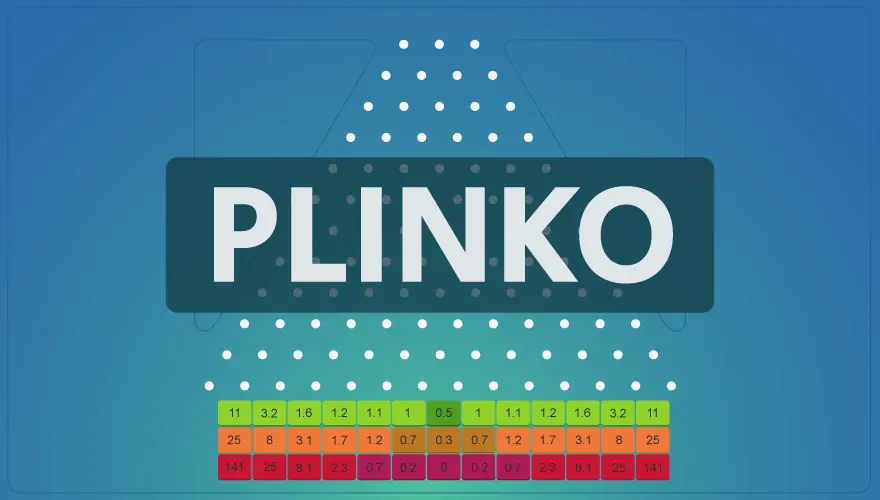
Plinko is a probability-driven casino game built around a descending ball and a field of pegs. After the player chooses a bet and usually a risk level, the ball is released from the top of the board. Each contact with a peg pushes it slightly left or right until it reaches one of the payout segments below. The multiplier attached to that final segment determines the round’s return.
The reason this format stands out is not mystery but clarity. In a slot, the player often waits for reels to stop and then interprets a result through paylines, symbol values, wilds, scatters, and feature triggers. In Plinko, the round is visible in motion. You can literally watch randomness unfold. That creates a very specific kind of engagement. It feels transparent even though the outcome is still governed by chance.
Another reason Plinko attracts attention is that it compresses the emotional arc of gambling into a very short sequence. The drop begins, the ball rattles through the board, and within seconds the round is settled. There is no long build-up, no lengthy animation requirement, and usually no interruption between attempts. This gives Plinko a pace that many players find easier to read than traditional reel-based products.
One of the more interesting observations I have made is that Plinko often feels “fairer” to players not because the math is gentler, but because the route to the result is visible. That distinction matters. Visibility is not the same as control. The board lets you see randomness, not influence it.
How the Plinko system works in practical terms
At Jonny jackpot casino, the core structure of Plinko is typically built around a few adjustable variables. These settings do more than change the look of the board. They alter the pace, the return distribution, and the emotional shape of a session.
- Bet amount — determines the monetary value of each drop.
- Risk level — usually low, medium, or high, affecting how payouts are distributed across the board.
- Rows or board depth — changes how many peg collisions occur before the ball lands.
- Auto-play or repeated drops — speeds up the session and can intensify bankroll swings.
The underlying logic is simple to describe. On every collision, the ball moves to one side. Over many rounds, outcomes tend to cluster around the center more often than the far edges. That is why the central slots usually carry lower multipliers, while the extreme edges hold the larger rewards. Rare outcomes sit where the ball is least likely to finish.
This is where Plinko becomes more than a visual novelty. The board is effectively a map of probability. Common landing zones pay modestly. Uncommon landing zones pay more. Very rare landings carry the dramatic multipliers that attract attention in highlight clips and streamer sessions.
What matters for the player is that the game does not hide its structure. The payout profile is usually displayed upfront. If the board offers a very high top multiplier, that value is not a gift; it is a sign that many drops may end in low-return or low-multiplier positions before a rare hit appears.
| Setting | What it changes | Why it matters in a real session |
|---|---|---|
| Low risk | More balanced payout spread | Results tend to be steadier, with fewer extreme swings |
| Medium risk | Mix of moderate and less frequent stronger multipliers | Can feel more dynamic without becoming too erratic |
| High risk | Large emphasis on rare top-end multipliers | Long dry stretches become more likely, but big spikes remain possible |
| More rows | Longer path with more possible routes | Often increases suspense and can sharpen the contrast between common and rare outcomes |
Why the session rhythm feels different from slots
The rhythm of Jonny jackpot casino Plinko is one of its defining traits. A slot session often alternates between routine spins and occasional feature events. Plinko works differently. Every round is self-contained, fast, and immediately understandable. There is no dependency on a future bonus trigger to make the session feel active. The action is happening on every drop. If bonuses are what you care about, compare bingo options at Jonny Jackpot Casino breaks down every offer currently running.
That changes how players perceive time and momentum. In slots, a player may tolerate many uneventful spins because a bonus round can restructure the entire session. In Plinko, there is usually no separate bonus layer waiting to rescue a flat run. The core loop is the full experience. If the chosen setup is not enjoyable over repeated drops, the game can start to feel mechanical very quickly.
On the other hand, when the setup matches the player’s expectations, Plinko can feel unusually clean. There is no need to decode symbols or evaluate feature complexity. The board itself becomes the story. One drop can look ordinary until the final few bounces suddenly send the ball toward a high multiplier. That moment creates a kind of tension that slots rarely reproduce in the same visual way.
A second observation worth remembering: Plinko is one of the few casino formats where suspense often peaks at the very end of the round, not at the start. The result is unresolved until the final deflections near the bottom. That late-stage uncertainty is a major part of its appeal.
Risk levels, probabilities, and what players often misunderstand
The biggest misunderstanding around Plinko is the idea that because the board is visible, the outcome is somehow more readable or beatable. It is readable in structure, yes. It is not predictable in the short term. Watching the ball bounce can create the illusion that a pattern is about to emerge, especially after several central landings or repeated low multipliers. But each drop remains an independent event within the game’s programmed logic.
Risk level is the most important setting to understand before playing. In low-risk mode, the board usually spreads value more evenly. That means more frequent modest returns and fewer dramatic jumps. In high-risk mode, the payout curve becomes more aggressive. The attractive top multipliers remain on display, but they are supported by a larger number of outcomes that return very little or fail to cover the stake.
For many players, this is where the real character of Plinko reveals itself. The interface looks simple, but the chosen risk profile can produce completely different emotional experiences:
- Low risk suits players who want smoother pacing and a longer session feel.
- Medium risk suits players who want visible fluctuation without fully embracing sharp bankroll swings.
- High risk suits players who accept that many rounds may feel unproductive while chasing occasional large multipliers.
Probability also needs to be interpreted correctly. Since central paths are statistically more common, many rounds will naturally drift toward modest outcomes. This is not the game “holding back”; it is the normal shape of the distribution. The edge slots are exciting precisely because they are difficult to reach consistently.
If a player enters Plinko expecting frequent standout returns, disappointment comes quickly. If the player enters with a clear understanding that rare outcomes are funding the headline potential, the experience makes much more sense.
What the game is really like over a full playing session
Single drops can be entertaining, but Plinko should be judged over a sequence, not in isolation. In a short burst, almost any setup can feel engaging. Over time, the nature of the board becomes more obvious. Low-risk play often produces a flatter session curve. The bankroll may erode more slowly, but the emotional peaks are lower. High-risk play can create the opposite effect: the session may feel quiet for long stretches and then suddenly lurch upward if a strong multiplier lands.
This is why bankroll management matters more than some players initially assume. Because rounds resolve quickly, it is easy to underestimate how many bets are being consumed in a short period. The simplicity of the interface can disguise the actual speed of spend. A player who would carefully pace 50 slot spins may burn through the equivalent amount faster in Plinko simply because each drop asks for so little attention.
At Jonny jackpot casino, that practical reality makes stake sizing more important than visual confidence. Just because the game looks minimal does not mean it is gentle. On a high-risk board with rapid repeat drops, the session can turn expensive much faster than the calm interface suggests.
A third useful observation: Plinko often feels harmless right up until the moment it starts accelerating. The absence of noisy bonus screens can make players less defensive about speed, and that is exactly when discipline matters most.
How Plinko differs from classic slots and other casino games
Plinko occupies an unusual space in the online casino catalogue. It is not a slot in the traditional sense, and it does not behave like blackjack guide either. Its appeal comes from being more direct than reels and more visually kinetic than many number-based formats.
| Format | Main player focus | Typical session feel | Key difference from Plinko |
|---|---|---|---|
| Classic slots | Symbols, paylines, features | Feature-driven, with highs tied to bonus rounds | Plinko removes reel logic and shows the path to the result |
| Crash games | Timing the cashout | Decision-heavy and tense | Plinko has no cashout timing; the drama comes from the drop itself |
| Roulette | Bet selection and wheel outcome | Structured and cyclical | Plinko feels more granular and visually progressive during each round |
| Dice-style games | Probability target and threshold | Fast and mathematical | Plinko translates probability into motion, which makes randomness easier to feel |
The biggest difference from slots is that Plinko does not rely on thematic immersion. There are no expanding wilds, free spins narratives, or layered bonus structures carrying the entertainment load. If a player enjoys decorative themes and feature discovery, Plinko may feel too bare. If a player prefers speed, transparency, and a more stripped-back relationship with probability, Plinko can be much more satisfying.
Compared with roulette overview, Plinko also feels less formal. There are no strategic decisions once the drop begins. The player’s influence is mostly front-loaded into setup choices. After that, the round belongs to chance.
Strengths and weak points that matter in practice
I think Plinko works best when it is judged honestly rather than through hype. It has clear strengths, but those strengths are tightly linked to equally clear limitations.
Where Plinko performs well:
- Immediate readability — even a new player understands the basic loop within seconds.
- Fast feedback — each round resolves quickly, which suits short sessions and direct decision-making.
- Visible probability structure — the board itself communicates why some outcomes pay far more than others.
- Flexible mood — risk settings can shift the experience from relatively steady to highly aggressive.
Where the format can disappoint:
- Limited depth beyond setup choices — once the novelty of the drop wears off, some players may want more variation.
- High-speed bankroll drain — rapid rounds can lead to faster spending than expected.
- Potential mismatch between expectation and reality — top multipliers are eye-catching, but they are not common outcomes.
- Reduced thematic engagement — players who enjoy story, symbols, and evolving features may find it too plain.
None of these points automatically make the game better or worse. They simply define its character. Plinko is efficient, not expansive. It is built around repetition with variable outcomes, not around layered progression.
Who Plinko suits best and who may prefer another format
In my view, Jonny jackpot casino Plinko is best suited to players who want a short learning curve and a clear relationship between setup and outcome profile. It works well for people who enjoy watching probability play out in a visible way and who do not need elaborate bonus structures to stay engaged.
It may be a good fit for:
- players who like fast rounds and direct results;
- players who want to experiment with low, medium, and high risk settings;
- players who prefer clean interfaces over heavy themes;
- players who understand that rare top multipliers come with a cost in consistency.
It may be a weaker fit for:
- players who want strategic influence during each round;
- players who mainly enjoy bonus rounds, free spins, and symbol combinations;
- players who get frustrated by long stretches of modest returns;
- players who tend to increase tempo too quickly when the format feels simple.
This last point is especially important. Simplicity can be misleading. Because Plinko is easy to follow, some players lower their guard and play faster than they would in a more complicated casino environment. That is not a flaw in the design, but it is a practical risk in real sessions.
What to check before launching Jonny jackpot casino Plinko
Set a strict session budget before the first drop, because Plinko rounds resolve in seconds and losses accumulate faster than most other casino games. Cash-out thresholds and wagering conditions on bonus funds often differ from standard slot play, so check those terms before committing real money. A common practice is to test the game in free-play mode first to observe volatility patterns, though past results never guarantee future outcomes.
- Review the risk setting. This is the single most important choice. It affects both the emotional tone and the likely bankroll pattern.
- Look at the multiplier spread. If the top prize looks unusually large, expect a more uneven distribution of returns.
- Set a stake that matches the speed of play. Fast rounds make even small bets add up.
- Consider trying a demo version first. It helps reveal whether the rhythm actually suits you.
- Decide what kind of session you want. Smooth and longer, or sharper and more speculative.
That final point is often overlooked. Many casino products can be approached casually. Plinko benefits from a clearer intention. If the player knows whether they want stability or volatility, the game becomes easier to evaluate and less likely to create false expectations. When the support team feels slow, Jonny Jackpot Casino slots table games and live casino options explains the fastest ways to reach them.
For New Zealand players exploring Jonny jackpot casino or the occasional alternative spelling Jonnyjackpot casino, the most useful mindset is not to chase the board’s biggest number, but to understand what kind of session the chosen board is likely to produce.
Final verdict
Jonny jackpot casino Plinko offers a very specific kind of casino experience: fast, transparent, visually simple, and heavily shaped by probability distribution rather than feature complexity. Its main strength is clarity. You can see the structure, understand the setup, and follow each result from release to landing. That makes the game accessible, but not automatically mild.
What Plinko really provides is a stripped-back form of suspense. The interface is easy, the logic is readable, and the emotional pressure comes from the contrast between frequent ordinary landings and occasional standout multipliers. That balance is what makes the game compelling for some players and unsatisfying for others.
I would describe its strongest points as speed, clean design, and the ability to tailor session mood through risk settings. Its main cautions are equally clear: outcomes can become repetitive, high-risk boards can be unforgiving, and the fast tempo can hide how quickly a bankroll is being used.
So, is Plinko worth trying? Yes, if you want a casino format that puts probability front and center and removes most of the decorative layers found in slots. No, if you want richer features, more strategic input, or a slower emotional curve. In that sense, Plinko is honest. It tells you what it is almost immediately. The key is whether that style of play matches what you actually enjoy once the drops start to add up. A quick read of Jonny Jackpot Casino returning player bonus codes review for mobile bonus and cashier checks answers most questions about limits and account settings.
FAQ
How does Plinko work on Jonny Jackpot?
A ball is released and bounces down through pegs before landing in a target slot with a multiplier. The result is determined by where the ball finishes and the multiplier shown for that slot.
What do the multipliers and risk level mean in the Plinko game lobby?
Each landing area on the Plinko board corresponds to a multiplier. Higher multipliers typically come with greater volatility, so outcomes can swing faster during a session.
How can a returning player quickly get to Plinko on the official site?
Open the Jonny Jackpot lobby and jump directly to Plinko, then switch to the mode needed for the next round. Logged-in accounts can keep session progress consistent across visits if the site settings allow it.
How are Plinko table limits and session restrictions handled?
The site may apply table limits that affect the allowed bet size for Plinko. Those limits can also change based on the selected mode, so the safest check is the bet control area before pressing launch.
Is Plinko similar to slots, or is it closer to live casino style play?
Plinko is a physics-based board game with ball drops and multipliers, so it is not played like standard slots with reels. It is closer to a quick-session casino games format where each round ends immediately after the ball lands.
What safety and responsible play steps should be considered before starting Plinko?
Use the balance and session controls provided by the account area and set a spending limit before playing. Taking short breaks and avoiding repeated bet changes during a session helps keep play under control.